

Filming in 360/VR: The Future of Immersive Storytelling
Written by: The Buddi Team
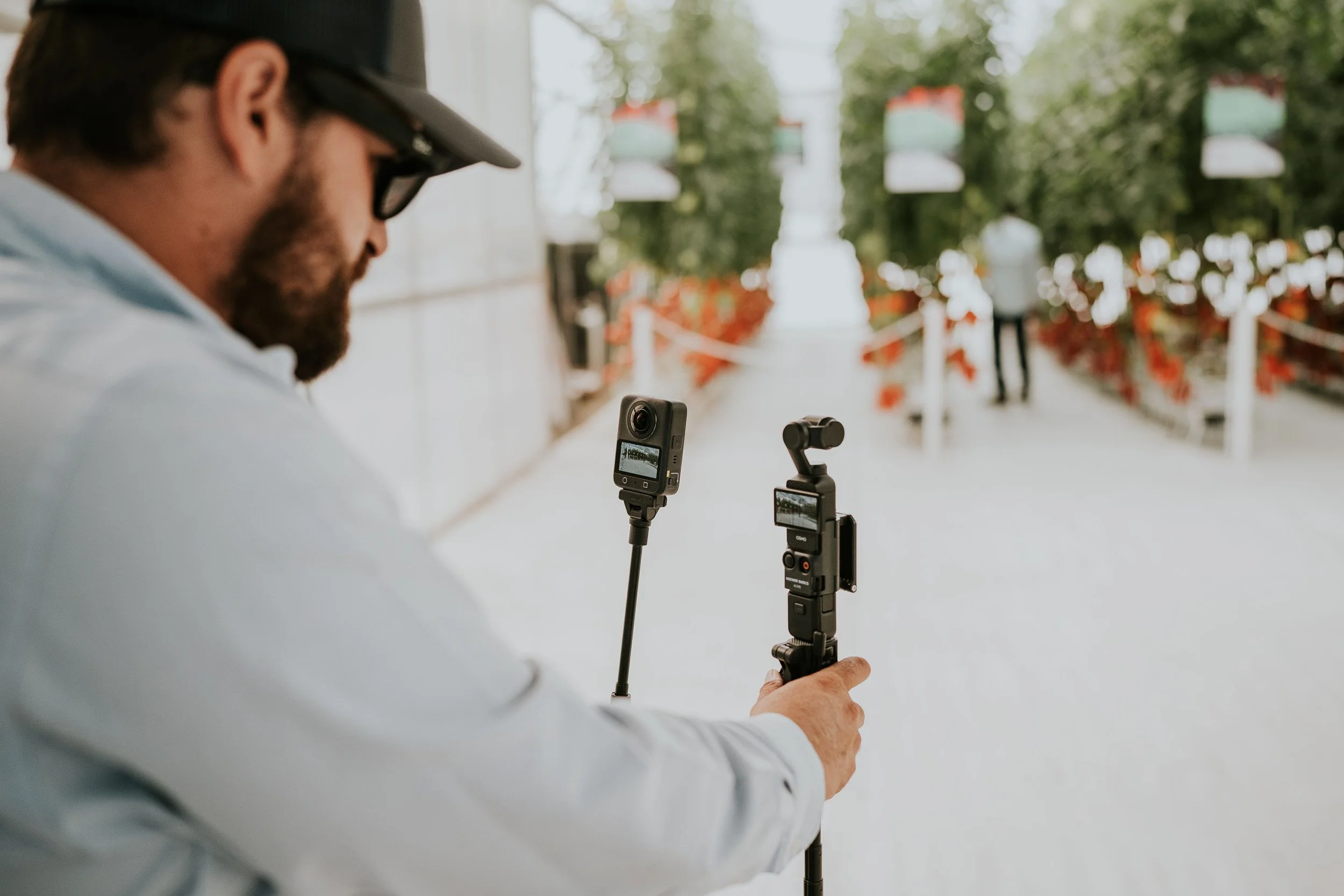
For over a century, cinema has relied on a single fundamental concept: the frame. Directors used focal length, camera angles, and tight compositions to decide precisely where audiences looked.
Filming in 360/VR (Virtual Reality) shatters that boundary entirely. In immersive cinema, there is no frame, no off-camera space, and no traditional edge of the screen. The viewer is placed squarely in the center of the action, trading passive viewing for spatial presence.
Transitioning from traditional 2D filmmaking to immersive 360 storytelling requires a complete overhaul of how we write, direct, lit, and edit visual stories.
1. Unlearning the 2D Language: Blocking Without a Frame
In standard filmmaking, a director relies on close-ups, over-the-shoulder cuts, and camera pans to build narrative tension. In 360 video, forcing those traditional techniques often breaks the illusion or causes motion sickness.
The Dynamic "Close-Up": You cannot zoom or cut to a tight close-up in 360 space without jarring the viewer. Instead, close-ups are achieved through actor movement—having a character physically step into the camera's personal space to create emotional intimacy.
The 150-Degree Focus Zone: While the camera captures 360 degrees, forcing viewers to constantly contort their bodies to track primary dialogue creates physical fatigue. Experienced VR directors keep main narrative beats within a comfortable 150-degree field of view, utilizing the remaining space for environmental context and background narrative.
Longer Takes over Rapid Cuts: Rapid montages and fast cuts disrupt spatial orientation in a headset. VR cinema leans into theatrical blocking and long, continuous takes, allowing scenes to unfold in real time.
2. Directing Attention: Guiding the Unfettered Eye
If the audience can look anywhere, how do you ensure they don't miss crucial narrative beats? Directing in 360/VR relies on environmental cues rather than rigid framing:
Spatial Audio (Ambisonics): Sound is the single most powerful tool for guiding gaze in VR. Utilizing directional, 3D spatial audio allows a whisper over the viewer's left shoulder or a crash behind them to naturally pull their gaze to the next plot point.
Lighting and Motion Cues: Bright practical lights, movement vectors (an actor pointing or walking), and color contrast naturally draw the human eye toward key focal areas.
Gaze Continuity: When transitioning between scenes, filmmakers align key visual focal points across cuts so the audience lands naturally on the important element in the new scene without getting disoriented.
3. On-Set Production: Nowhere to Hide
Because 360-degree camera rigs record every direction simultaneously, traditional production workflows fall apart on set:
The Invisible Crew: There is no "behind the camera". Directors, sound recordists, and lighting technicians must physically hide—behind furniture, in neighboring rooms, or under specialized camera mounts—during takes.
Practical Lighting Integration: Traditional big-rig film lights cannot sit open on set. Lighting must be built organically into the environment using practical fixtures like lamps, streetlights, neon signs, or hidden LED strips.
Stitching and Nodal Calibration: Multi-lens VR camera rigs require precise calibration to minimize stitch lines—the seams where separate lens images blend together. Placing actors or critical action directly on a stitch line leads to warping and visual artifacts in post-production.
4. The Future: From Passive Spectator to Active Participant
VR filmmaking is evolving past static 360-degree video captures into fully interactive 6 DoF (Six Degrees of Freedom) volumetric environments. Combined with game engines like Unreal Engine and Unity, viewers are no longer just floating heads looking around; they can physically lean in, walk through the set, and interact with the digital space.
Filming in 360 and VR demands a shift in mindset: moving from telling a story on a screen to building a world for an audience to inhabit. For directors willing to unlearn classic screen rules, it offers the ultimate cinematic frontier—empathy through complete immersion.

Check out Buddisystems
Sign up for Buddisystems today and unlock a world of creative possibilities!